
Most of our work happens outdoors, where sound has nowhere to go but away. Wind moves it, crowds soak it up, and every field sounds different. After thousands of shows, the questions that kept coming up weren't about louder or bigger. They were about listening itself: what a room does to sound, and what sound does to the person sitting in it.
The Sphere is how we're going to study that. This is the first of our Lab Notes, a running record of the research as we build it.
What it is
The Sphere is a 14-foot round listening chamber, built underground, with two chairs at its center. Above ground sits a control room. From there, an operator plays precise frequencies and sound fields into the chamber through an 8.2 surround system: eight full-range speakers around the listeners and two subwoofers underneath it all. A talkback system keeps the operator and the listeners connected the whole time.
Think of it as an instrument you sit inside. The room, the speakers, and the control room together are the machine.
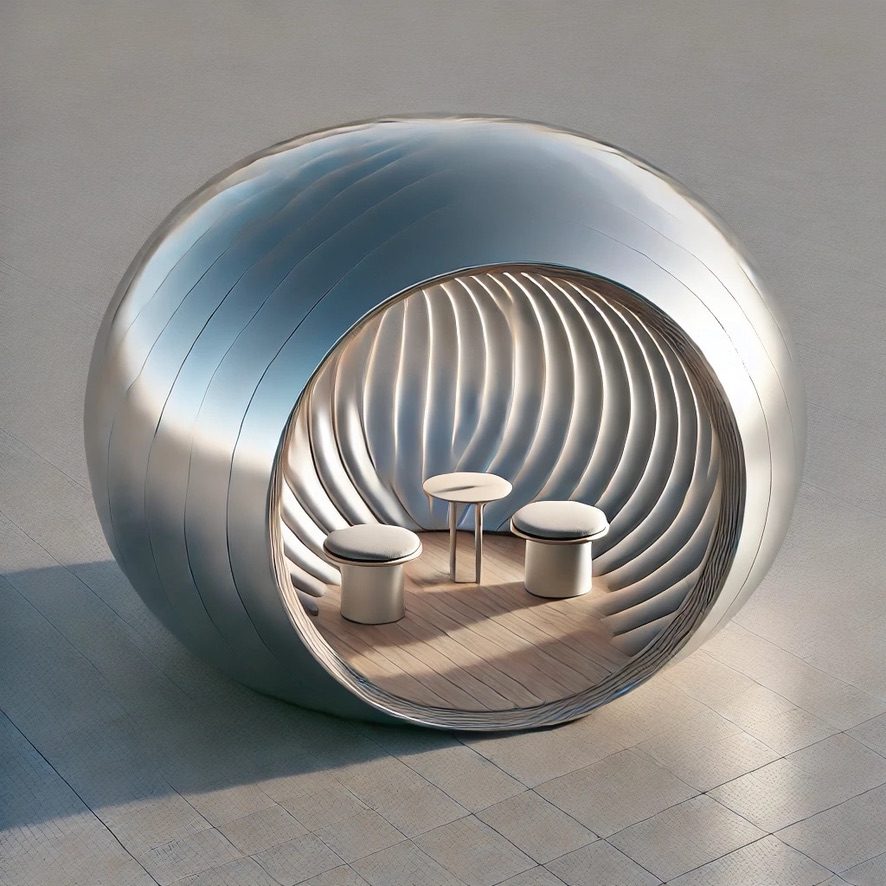
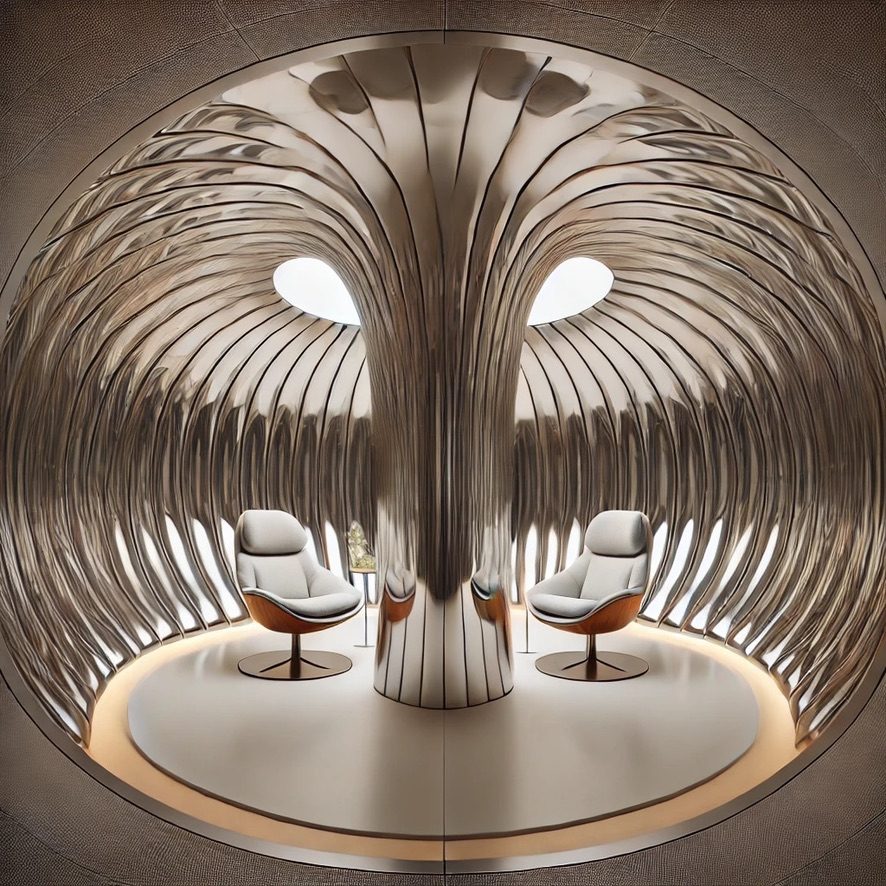
Why underground
Earth is one of the best sound barriers there is. Soil and concrete are dense and massive, and mass is what stops sound from passing through. Putting the chamber underground drops the noise floor: no traffic, no wind, no birds, no HVAC rumble from the next room. In a quiet enough space, people start hearing things they normally can't, including their own heartbeat. That quiet is the starting point for every experiment.
Why round, and why that's a problem
A round room surrounds the listener evenly, which is exactly what we want for immersive sound. But curved walls have a well-known habit: they focus reflections back toward the center. It's the same effect that makes whispering galleries work, like the one in St Paul's Cathedral in London, where a whisper against the wall can be heard clearly on the far side.
Unchecked, that focusing would pile reflections onto the two chairs and smear everything we play. Hard opposing surfaces also cause flutter echo, the rapid "zing" you hear when you clap between two bare walls. And early reflections, the first bounces that reach your ears within a few dozen milliseconds of the direct sound, blur where a sound seems to come from.
The Fibonacci answer
The walls are where the design gets interesting. Instead of a smooth curve, the chamber is lined with reflective panels arranged in a Fibonacci spiral, the same growth pattern you see in sunflower seeds and pinecones. Nature uses it because it packs elements without ever repeating the same spacing, and that's the point here: no regular pattern means no single reflection path gets reinforced. Sound gets scattered in many directions instead of focused into one spot.
Behind the panels, about two inches of foam sits in an air gap to catch the flutter and early reflections that get through. The result we're after is a room that feels open and even, not echoey and not dead.
Engineers have used number sequences to shape sound for decades. In the 1970s, the physicist Manfred Schroeder designed diffusers based on number theory, and versions of them hang in recording studios and concert halls today. The Sphere borrows that idea and wraps it around the listener.
What we'll study
One of the first areas is how people experience tones and sound fields in a near-silent, controlled space. A classic example is the binaural beat: play one tone in your left ear and a slightly different tone in your right, and your brain hears a third, pulsing tone at the difference between them. It was first described by the physicist Heinrich Wilhelm Dove in 1839, and it is still studied today. The Sphere lets us play effects like that with far more control than headphones in a living room.
We're builders, not doctors, and we won't make health claims. What we will do is document the build, the measurements, and what people report, and share it here.
Where it stands
The Sphere is in design. Drawings are done, and the next Lab Notes will cover the panel layout, the speaker placement, and the first measurements once there's a room to measure. If you work in acoustics, audio technology, or listening research and want to compare notes, get in touch.
Planning an event? Build your show and Barbie will follow up with a quote.